


Create a 10-word scroll-stopping headline for: Local Groups See Payoff With Purple Martin Conservation Efforts | Vibe NC

Rewrite this local event or lifestyle story to be enticing for North Carolina residents. Keep HTML tags:
Even if you’ve never heard of a purple martin, you’ve probably seen their houses—tall, steepled white birdhouses with many entrances or racks of dozens of gourd-shaped “condos.”
Up close, the birds are striking, with streamlined bodies and calls like laser guns. The adult males are a uniform, iridescent purple-black.
In the eastern United States, purple martins have become completely reliant on humans for housing. The western subspecies sometimes nests naturally in cacti, but the hollow trees eastern martins would historically rely on simply don’t exist anymore in numbers that could support them.
Growing up, some of Courtney Rousseau’s earliest memories were spent watching a neighbor’s colony along the Pungo River.
“I remember sitting and watching on my porch, watching these beautiful birds. I loved their calls. I loved that there was a colony of them,” Rousseau said. “We could watch their antics, feeding and talking to each other. I thought it was the most wonderful thing.’”
Today, as president of the North Carolina Purple Martin Society, Rousseau spends much of her summers travelling the state to promote purple martin conservation, recruiting new landlords, and training old ones.

The purple martin society also manages three public colonies across the Triangle: one at Yates Mill Park, one at the North Carolina State University Club, and one at Sugg Farm Park in Holly Springs. Every week, volunteers visit their nesting sites to check on nests’ progress and ensure that the colony is free of mite infestations, invading birds, and dead nestlings.
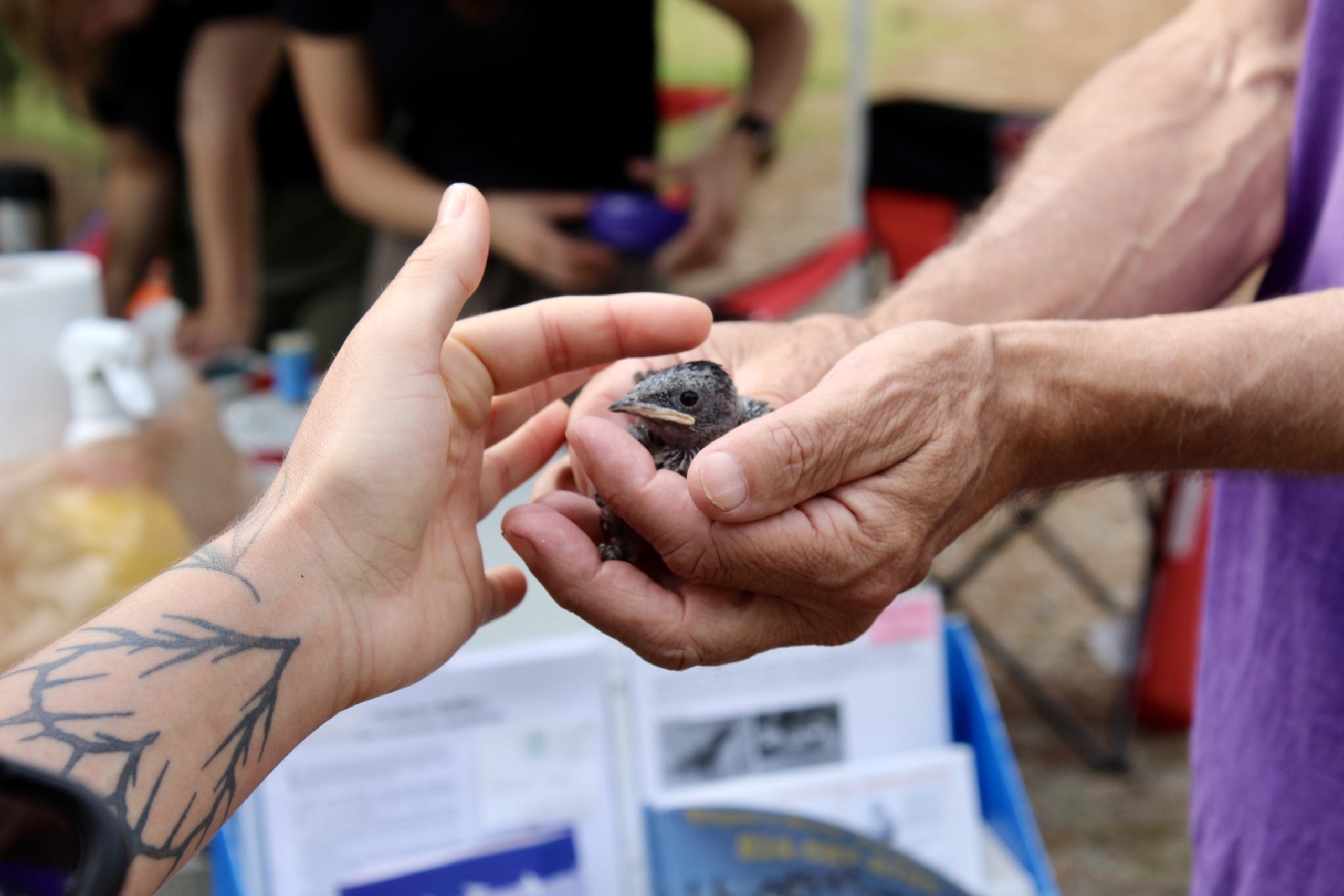
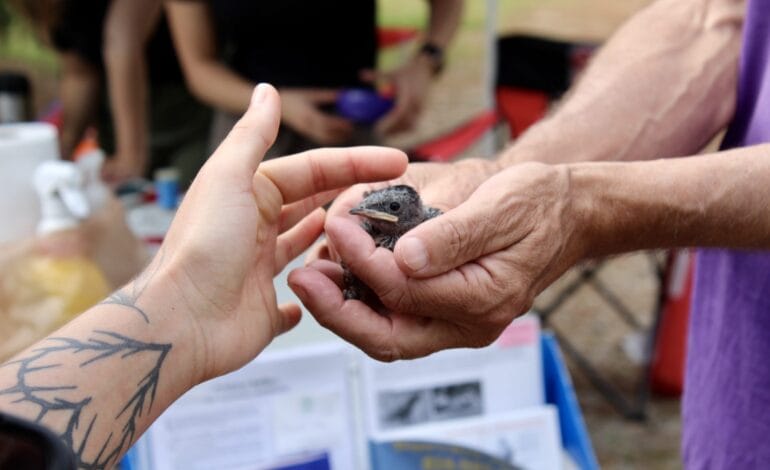
June means banding season. One by one, nestlings at their colony sites are pulled out of their nests, weighed, and given two lightweight bands: one color-coded to identify where they came from, and one with a unique identification number. This allows researchers to find out where this year’s hatchlings disperse after their yearly migration to South America.
Public banding days also represent an excellent opportunity to raise awareness.
“As an educator and a naturalist, what I love about them is that humans and martins have this long interactive history here,” said John Connors, former president of the Wake County Audubon Society and longtime volunteer, at a banding event earlier this week.

The relationship between humans and purple martins stretches back to before colonization, when Indigenous peoples hung racks of dried gourds to attract the birds. It’s the goal of the purple martin society to make sure that relationship carries on into the future.
At banding events in late June,…