




Acting as a professional North Carolina local blogger for Vibe NC, write an engaging article based on the following content:
(Science Times)
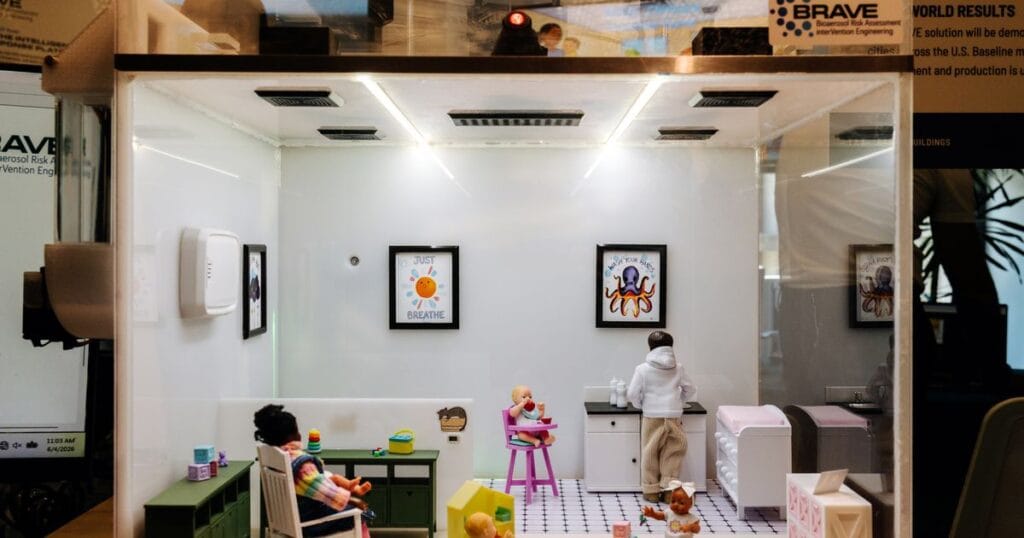
WASHINGTON — Linsey Marr, an environmental engineer, stood next to a pair of clear plastic boxes packed with tubes, nozzles and electronics, an odd-looking prototype that one day might serve to protect children in daycare from airborne viruses.
A nozzle filled the right-hand box with a faint silvery mist. A pump pulled some of that air into the left-hand box, where a sampler trapped floating particles and droplets. Soon, a digital screen bolted to the box turned red: “Detected! Dust mite allergen Der f 1.”
A protein shed by dust mites, Der f 1 can trigger asthma attacks when inhaled. Marr’s device had detected 843 picograms of Der f 1 per cubic meter. A single grain of salt is about 10 million times as heavy.
“Before this instrument, it would have taken us two days to figure out how much was in the air,” Marr said. “Now we’re doing it almost in real time.”
Dust mite allergens are not the only threats that Marr’s team aims to fish from the air. The technology, still evolving, can already sniff out influenza, coronavirus and E. coli.
“We have 10 different things that we’re able to detect, and by the end of the program, there will be 25 different things,” she said.
Marr was shouting over the din on the fifth floor of a Washington office building where more than 200 people milled about, getting a first look at a rapidly evolving frontier in science: technology designed to keep indoor air safe in daycare centers, schools, hospitals — anywhere people gather.
This grown-up science fair was hosted by the Advanced Research Projects Agency for Health — ARPA-H, for short — which is spending $150 million to create what it calls “an immune system for every building.”
At the start of the event, the program manager, Jessica Green, gave a brief welcome speech. “We have the right to be breathing healthy indoor air,” she said.
Green was echoing the words of William and Mildred Wells, a husband-and-wife team who discovered the threat of airborne germs in the 1930s. They famously protected children in….
1. Create a catchy, human-sounding title based on Buildings May Soon Have ‘Immune Systems’ That Fight Airborne Disease :: WRAL.com.
2. Write a 3-paragraph blog post that summarizes the news and explains why it matters to North Carolinians.
3. Use a conversational and helpful tone.
4. Use proper HTML formatting (h3 for headers, p for paragraphs).
5. End with a call to action asking readers for their opinions.
Do not mention being an AI.


