



Create a 10-word scroll-stopping headline for: A Year After Chantal, Durham’s Old Farm Neighborhood Is Still Recovering | Vibe NC

Rewrite this local event or lifestyle story to be enticing for North Carolina residents. Keep HTML tags:
At about 2:30 a.m. on July 6, 2025, Jameka Autry awoke to a frantic call from her neighbor. Floodwater had pooled into their house, they said, and Autry and her mother, Winona, needed to leave fast in case their home was next.
Autry, still half asleep, opened the back door of her house on Peppercorn Street.
“There was no porch. There were no steps. We were literally surrounded by water and couldn’t get out,” she said. After dialing 911 twice, Autry and her mother were rescued by boat before the floodwaters rushed into their home. The next day, it was gutted. Overwhelmed by repair costs, she and Winona had to sell the house in November.
Every Old Farm resident remembers the exact early-morning moment when they learned Tropical Storm Chantal’s floodwaters were violently rushing their tranquil neighborhood in North Durham. For many, like Autry, it was the last time they saw their homes intact. For some, it was the last time they lived there at all.
“You literally just see your house, your childhood house, torn down to nothing. You have to throw out all of your furniture, and it’s a devastating experience. I wouldn’t wish it on most people, probably not even my worst enemy,” Autry said.
Nearly a year later, Old Farm is still in disaster response mode. Some residents remain displaced from their homes; with Chantal leaving structural damage and mold in its wake, homeowners scrambled (and are still scrambling) to find somewhere habitable to stay throughout repairs.
Others, many of whom had lived there for more than four decades, sold their longtime homes to eager real estate investors, unable to shoulder the financial burden of repairs—an onus compounded by a lack of federal aid, meager state grants, and outdated floodplain maps that left some without flood insurance. Driving around Old Farm today, some houses are boarded up and stagnant, as if they hadn’t been touched since July. Repair vans are haphazardly parked about the winding streets—both to fix up the homes of remaining residents and to make others that were bought by LLCs look polished, bright-white new, and unrecognizable.
Chantal’s Long, Ongoing Aftermath
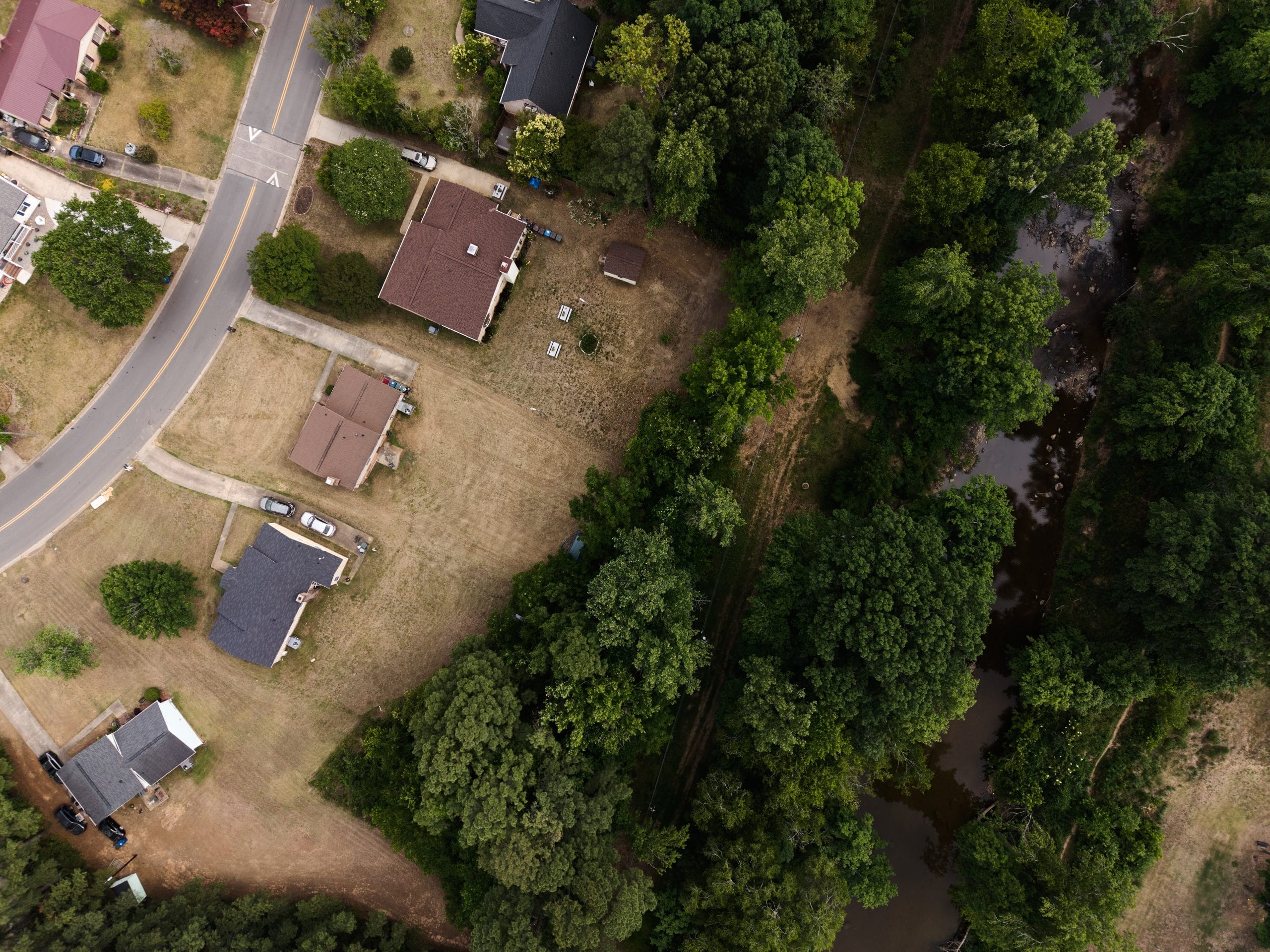
Tropical Storm Chantal unleashed historic rainfall in isolated pockets of central North Carolina. The sliver of Durham County that Chantal hit, and hit hard, was Old Farm and River Forest, two adjacent historically Black neighborhoods along the Eno River, which rose to a record high due to the storm. The streets of Old Farm transformed into turbid, rushing waterways, claiming cars and the bottommost levels of many homes—leaving residents stranded at the mercy of water rescue boats. More than 100 Durham residents (mainly in Old Farm and River Forest) were water rescued, while others, like Morgan Fielding, had to shelter in place to wait out the flood.
Fielding, a remote tech worker in her 40s, joked wryly that on the day Chantal hit, she learned she wasn’t someone who did…